
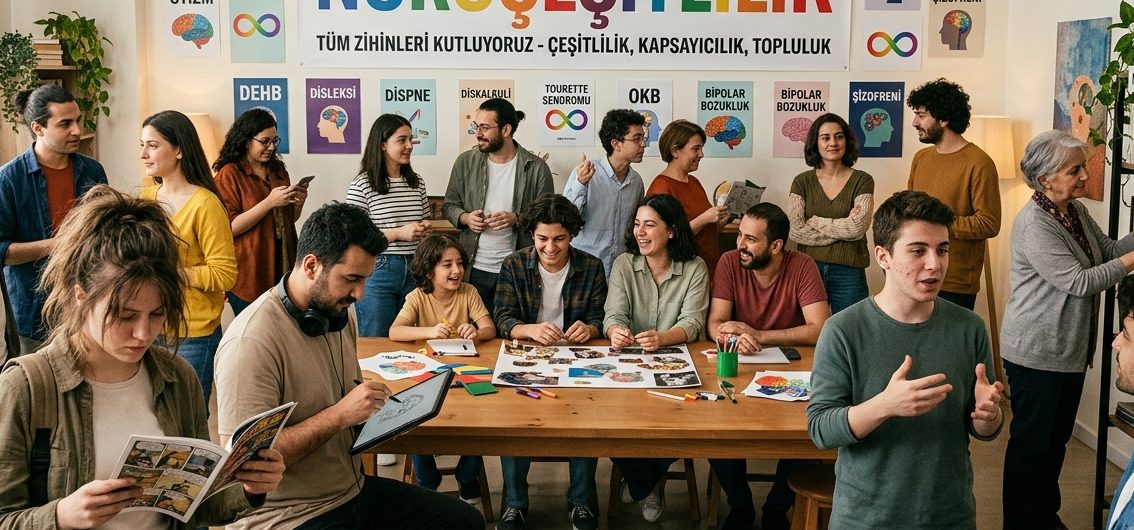
Neurodiversity is an approach that recognizes that people’s brains and nervous systems function in different ways and is a natural and integral part of being human. Each individual’s way of thinking, learning, communicating, and perceiving the world is unique. The concept of neurodiversity considers these differences not as “deficiencies” or “disorders,” but as a reflection of human diversity.
Initially associated primarily with autism, the concept of neurodiversity has over time expanded to include attention deficit and hyperactivity disorder (ADHD), learning difficulties such as dyslexia, Tourette syndrome, synesthesia, and some neuropsychiatric conditions. In fact, high creativity and high cognitive ability are also considered part of this diversity.
The neurodiversity movement, which emerged in the 1990s, is a social justice approach advocating for the recognition and inclusion of neurological differences in society. This perspective proposes to see autism, not as a disease or disorder, but as a natural and valuable part of society. The fundamental emphasis is on the fact that what is truly challenging is not the individual themselves, but the environmental and societal arrangements that do not take into account the needs of the individual.
Otizm, nöroçeşitliliğin önemli bir parçasıdır ve sıklıkla başka nöroçeşitlilik durumlarıyla birlikte görülür. Otizmli bireylerin büyük bir kısmında DEHB, öğrenme güçlükleri, kaygı bozuklukları ya da duyusal farklılıklar eşlik edebilir. Otizm, tek tip bir profili ifade etmez; aksine son derece geniş bir bilişsel ve gelişimsel çeşitliliği kapsar. Otizmli bireylerin yaklaşık %40’ı normal ya da normalin üzerinde zeka düzeyine sahiptir. Yaklaşık %10’unda savant sendromu olarak adlandırılan, belirli alanlarda olağanüstü beceriler görülebilir. Öte yandan otizmli bireylerin yaklaşık %60’ında farklı düzeylerde zihin yetersizliği eşlik edebilir. Bu dağılım, otizmin ne “yüksek işlevli” ne de “ağır” gibi tek bir kategoriyle açıklanamayacağını; her bireyin kendi güçlü ve destek gerektiren alanlarıyla değerlendirilmesi gerektiğini göstermektedir.
The neurodiversity approach views autism and other neurological differences not as “conditions that need to be corrected,” but as natural human diversity that can reveal an individual’s potential with the right support and adjustments. This perspective emphasizes the importance of inclusive, flexible, and individualized systems in all areas, from education to employment, health care, and social life, rather than evaluating individuals according to a single norm. The full and equal participation of neurodiverse individuals in social life is possible only with a society that accepts and supports differences.
Prepared by: Dr. Nursinem Şirin
Director of Education R&D and Projects
References:
- American Psychiatric Association. (2013). Diagnostic and Statistical Manual of Mental Disorders (5th ed.).
- Günaydın, M. & Öztop, D. B. (2021). Autism spectrum disorder: Psychopathology and comorbid disorders. In B. Sucuoğlu, H. Bakkaloğlu & M. Ç. Ökcün-Akçamuş (Eds.), Handbook of Autism Spectrum Disorder from Diagnosis to Intervention (pp. 77-100). Vize Akademik.
- Motavalli Mukaddes, N., Ercan, E. S. (2023) Life-long neurodevelopmental disorders. Simurg Arts.
- Ökcün Akçamuş, M. Ç., (2024). TOHUM Autism Foundation Assessment and Development Reports VII: Inclusive Approaches for Individuals with Autism Spectrum Disorder.
- World Health Organization. (2019). International Classification of Diseases for Mortality and Morbidity Statistics (11th Revision).
- https://www.tohumotizmportali.org/files/tov-gelisim-raporu-21032024.pdf
- https://www.autism.org.uk/advice-and-guidance/topics/behaviour/masking
- https://www.autism.org.uk/advice-and-guidance/professional-practice/autistic-masking
- https://www.psychologytoday.com/us/basics/neurodiversity
- https://www.health.harvard.edu/blog/what-is-neurodiversity-202111232645